
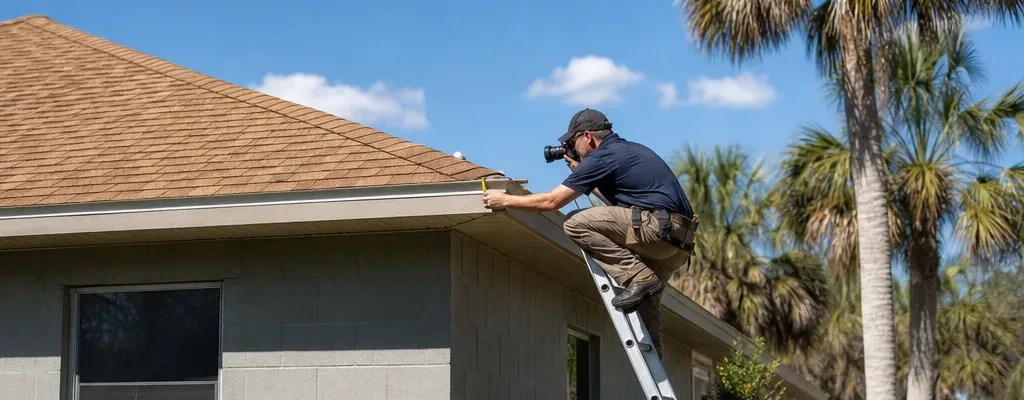
Why Your Home's Age Changes What Credits You Can Get
Newer homes built under Florida's statewide building code often earn credits right away. Older homes start with fewer automatic credits, but a newer roof, straps or clips, a hip roof shape, or storm shutters can still count. What matters is what can be seen in the attic and proved with paperwork.
The wind mitigation form doesn't just ask when your house was built. It asks how it's held together. Still, the build year sets the starting line. A home built after Florida's statewide building code took effect was built to tougher wind rules, and that alone can qualify for credit. An older home doesn't get that head start, so every credit has to come from a feature we can verify.
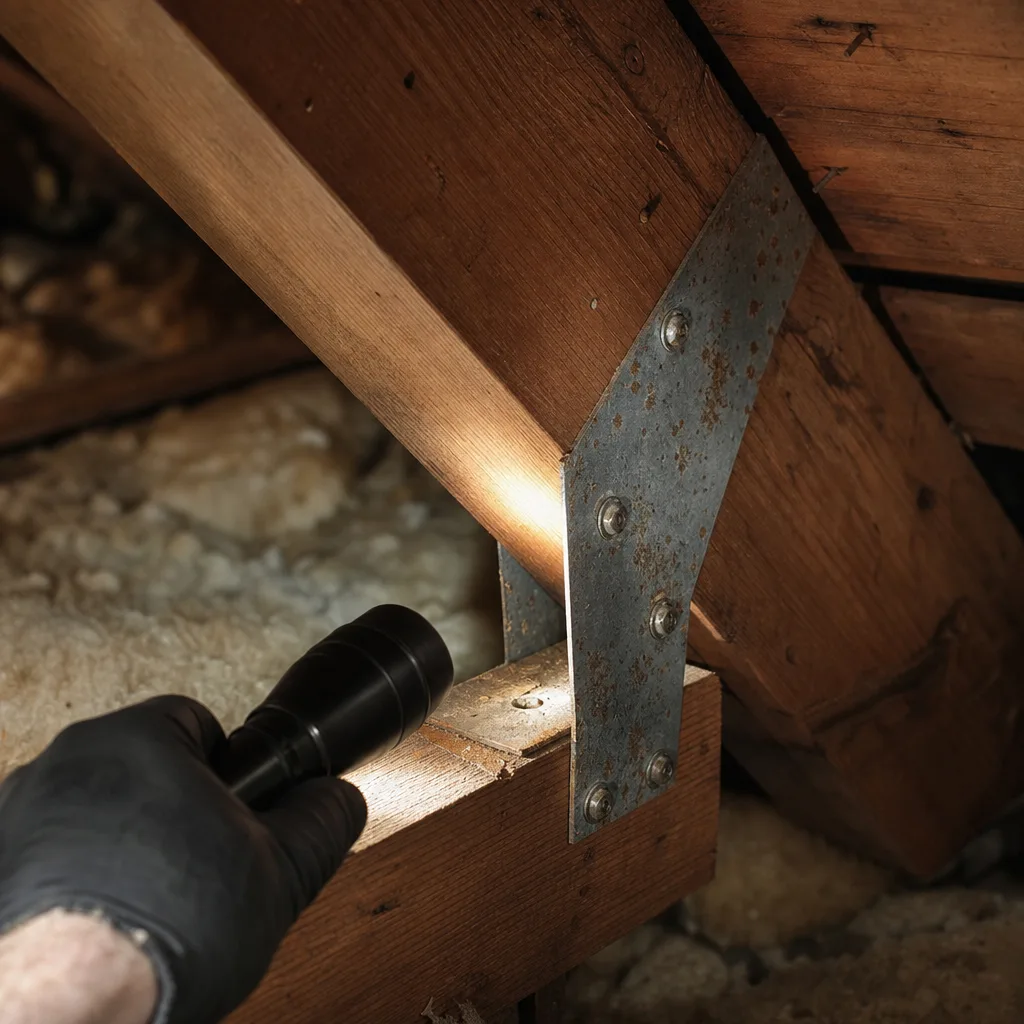
That's why two houses on the same Inverness street can get very different results. One was reroofed a few years ago with a permit. The other still has its original roof and nothing on paper. From the road they look about the same. In the attic and in the permit records, they don't.
On an older home, these are the features we look hardest at:
- Roof covering: If the roof was replaced under a permit, the permit date can show it meets newer standards, even if the house itself is decades old.
- Roof deck attachment: This is how the plywood or boards on top of your rafters are nailed down. Nail size and spacing matter, and older roofs were often fastened with less.
- Roof-to-wall attachment: This is what keeps the roof from lifting off the walls in high wind. Older homes often rely on toenails, which are nails driven at an angle. Metal clips or straps rate better.
- Roof shape: A hip roof slopes down on all four sides and handles wind better than a gable roof. This doesn't change with age, so an older hip-roof home can still earn this one.
- Opening protection: Rated shutters, impact windows, and impact-rated garage doors can count no matter when the house was built, as long as the products can be verified.
Paperwork carries more weight on older homes. If you've replaced the roof, added shutters, or swapped out windows or a garage door, find the permits, receipts, or product labels before the inspection. We can only mark what we can see or document. A great feature with no proof may not get the credit it deserves.
Some older roofs can be strengthened without a full replacement. Adding a third nail to the metal clips where roof trusses meet the walls is one example, and a Third Nail Retrofit Inspection documents that work so it can count.
Here's the honest part. If your home is older, has its original roof, toenailed trusses, a gable roof, and no shutters, the report may not show much to credit. We'd rather tell you that up front than have you expect a big change on your bill. But we'll also point out which upgrade would make the biggest difference if you ever replace the roof or add protection. With Jamie's years in construction, we can usually tell you which fixes are worth the money and which aren't.
What the Inspection Checks and How the Form Works
A Wind Mitigation Inspection fills out one standard form that Florida insurance companies use. Each answer on that form shows how well your home holds up to wind. Your insurer then turns those answers into credits on your bill. The inspection doesn't set your discount. It gives your insurance company proof, and they do the math.
Most of the work happens in two places: the attic and the outside of the house. The roof deck, the roof-to-wall connections, the roof shape, and the openings we covered above all get a box on the form. A few more items matter too.
- Secondary water resistance: This is an extra sealed layer under the shingles, often a peel-and-stick membrane. If wind tears off shingles, it helps keep rain out of the house. It's hard to see on a finished roof, so roofing permits or paperwork often prove it.
- Roof-to-wall detail: The form doesn't just ask whether you have clips or straps. It asks what kind. Single wraps and double wraps, where a strap goes over the top of the truss, rate higher than a basic clip.
- Every opening: Windows, doors, skylights, and the garage door all count. The weakest one sets your rating. One unprotected window can pull the whole category down, even if every other opening has rated shutters.
- Building code year and roof permit date: These come from records, not the attic. They help decide which boxes your home qualifies for.
Each item comes with a photo. Insurers want to see the strap, the nail pattern, or the shutter label, not just take someone's word for it. When something can't be seen or proven, the form has to mark it at the lower level. That isn't a judgment about your house. The form only gives credit for what can be shown.
The finished form is signed by a qualified inspector. Ours are signed by a licensed Florida home inspector, license HI9000. You send the form to your insurance agent, and they apply whatever credits your policy offers. Two homes with the same form results can still see different savings if they're with different insurers, since each company sets its own discount amounts.
Before the inspection, clear a path to your attic access, whether it's a hallway hatch or a closet ceiling. Set out any roof permits, window or shutter receipts, and garage door paperwork you have. A few minutes of prep can be the difference between a box that gets credit and one that doesn't.
Keep in mind what this inspection is not. It isn't a full home inspection, and it doesn't rate the condition of your roof, plumbing, or wiring. It answers one question for your insurer: how is this house built to handle wind? If your insurer also wants to know about the age and condition of major systems, that's a separate 4-point inspection, which checks the roof, electrical, plumbing, and HVAC.
Once the form is done, it stays useful as long as the house stays the same. If you later add shutters, replace the roof, or install a new garage door, a new inspection can capture those upgrades so you aren't paying for protection your current form doesn't show.
Why the Inspector's License Matters for Your Insurer to Accept the Form
Your wind mitigation form is only worth something if your insurance company accepts it. Your house earns the credits. The signature on the form is what makes the insurer believe them. Florida's form spells out which kinds of professionals are allowed to sign it, and a licensed home inspector is one of them. If the person who signs isn't qualified, or the license can't be confirmed, the insurer can refuse the form. Then your attic straps and shutters count for nothing on your bill.
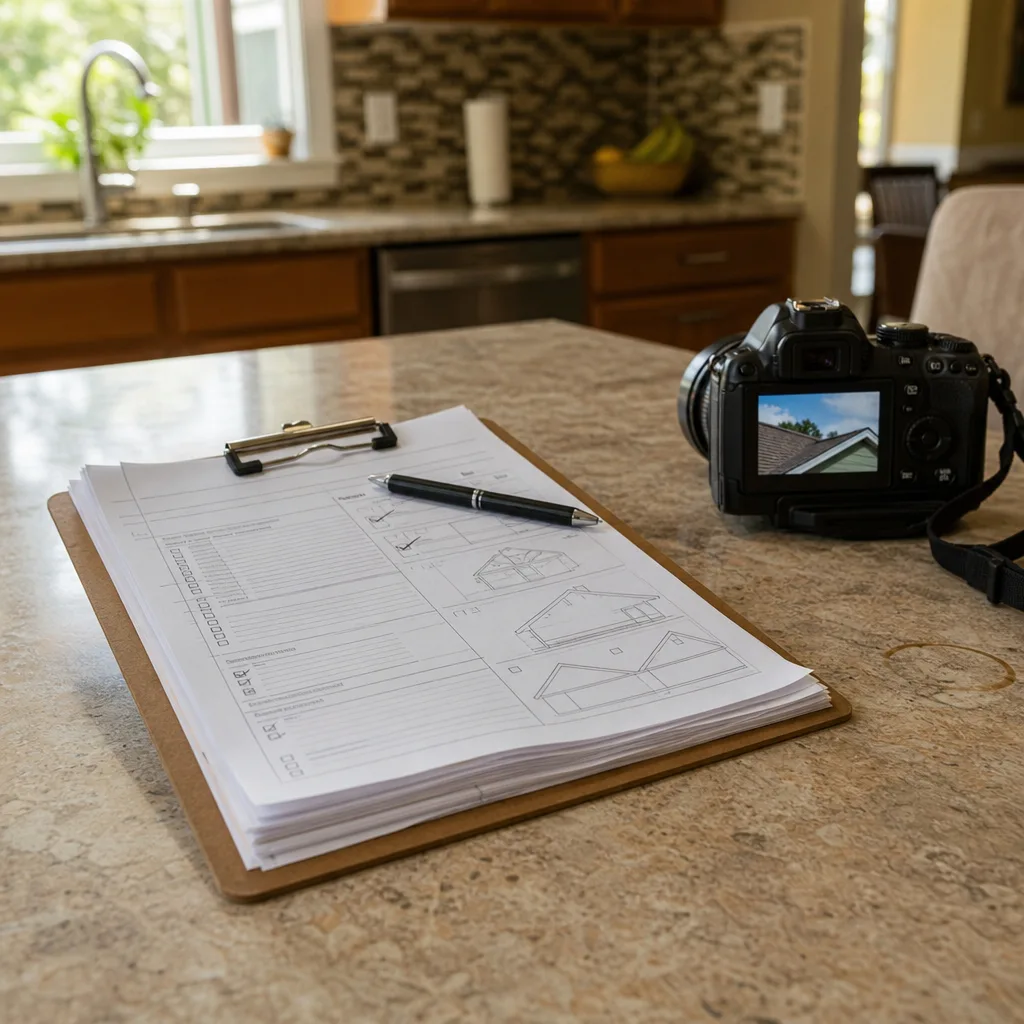
That's why we put our license number on every form we sign. Your agent or underwriter can check it against the state's public license lookup in about a minute. You can too, and you should do that with any inspector you're thinking of hiring.
A form can also get sent back for reasons that have nothing to do with your house. Here's what we'd check on any form before you send it to your agent:
- The inspector's name and license number are printed clearly, and the form is signed and dated.
- The name on the form matches the person who came to your house.
- Every question has an answer. A blank box gives the insurer a reason to stop.
- There's a photo behind each credit you're claiming, like the strap, the nail pattern, or the shutter label.
- The address, build year, and roof permit date match your records.
Timing is why this matters so much in Citrus County. Most folks don't think about a wind mitigation form until a renewal notice shows up or a closing date is set. If you're buying in Inverness, especially from out of state, your agent may need the form before they can quote a policy you can close on. A rejected form at that point means a second visit, a second bill, and a closing that waits on paperwork.
Here's the honest part. A license doesn't make your house rate better. No inspector can give credit for a clip that isn't there, and you shouldn't want one who would. If a form claims more than the house can back up, it's a problem waiting for an insurer to find. What a licensed inspector with real building experience gives you is a form that holds up. Every box shows what's in your attic and on your walls, with proof attached.
Years of hands-on construction experience help here. Knowing what a proper strap install looks like versus a shortcut means the box marked is the one your house has truly earned. That's the box your insurer can stand behind, and the one that keeps saving you money.
When You Do Not Need a New Inspection
Not everyone who calls about a wind mitigation form needs a new one. We'd rather save you the money than sell you a visit that won't change anything. Here are the times we'd tell you to hold off.
You already have a recent form and nothing has changed. If your house has the same roof, the same windows, and the same garage door it had when the last form was done, a new inspection will find the same things. The answers on the form won't move, so your credits won't either. Dig out the old form and send it to your agent. In Florida, a wind mitigation form is generally good for up to five years, as long as nothing on the house has changed. Your agent can confirm what they have on file in a quick phone call.
You're switching insurance companies. The form is a standard Florida form, so it isn't tied to one insurer. If you're shopping for a new policy, give the new agent the form you already have. A new company may still ask for a fresh one, but don't assume it will. Ask first.
You're buying a home and the seller has a recent form. Ask the seller or the listing agent for a copy. If it's recent and the house hasn't been changed since, your insurance agent may be able to use it to quote your policy. That can save you a step before closing. If the agent says they need a new one, then you'll know, and you can book it with time to spare.
You're about to replace the roof or add shutters. If a new roof, impact windows, or a new garage door is coming in the next few weeks, wait. An inspection done now will show the old setup. You'd end up paying for a second one after the work is done. Have the work finished, keep the permit and the product paperwork, and then get the inspection so the form shows what you paid for.
Your insurer doesn't give much for it. Some policies offer small wind credits, or none on certain types of coverage. Before you book, ask your agent two things:
- Does my policy give wind mitigation credits, and on what part of the premium?
- Do you already have a form on file for this address, and is it still good?
If the answer is that credits are small and your house is older with nothing new to show, a new form may not be worth it right now. That's an honest call you can make on your own.
There's one case where people skip it and shouldn't. That's when work was done but never got onto paper. If you added straps, put on rated shutters, or reroofed since your last form, that old form is now selling your house short. That's the time a new inspection pays for itself, because the upgrades are already there and just need to be shown.
Wind Mitigation vs. 4-Point Inspection: Two Different Reports
People mix these two up all the time, and it's easy to see why. Both are short insurance inspections, both look at the roof, and your agent may ask for both in the same breath. They answer two very different questions, though. If you order the wrong one, you've lost time you may not have before a renewal or a closing.

Here's the simplest way we can put it. A wind mitigation report asks your insurer, "How much should we take off this bill?" A 4-point report asks, "Should we insure this house at all?"
- Why you get it: Wind mitigation is about saving money through credits. A 4-point is usually about eligibility. Many insurers won't write or renew a policy on an older home without one.
- What it looks at: Wind mitigation looks at how the house is built to resist wind. A 4-point looks at the age and condition of the roof, electrical, plumbing, and HVAC.
- What a weak result means: A modest wind mitigation form just means fewer credits. A 4-point that turns up an old electrical panel, worn-out plumbing, or a roof near the end of its life can lead an insurer to ask for repairs or decline the policy.
- Who decides you need it: You can choose to get a wind mitigation form to lower your premium. A 4-point is normally something the insurance company requires, and each company sets its own age cutoff.
The roof is where the confusion starts. Both reports cover it, but from different angles. The wind mitigation form cares how the roof is fastened down and what shape it is. The 4-point cares how old it is and whether it's leaking, curling, or missing shingles. A roof can be strapped down well and still be worn out, or brand new and toenailed. One report can't stand in for the other.
Take a buyer looking at a 1980s block home in Inverness. The insurance agent asks for a 4-point because of the home's age. The buyer also wants a wind mitigation form, because that home has a hip roof and a reroof permit that could earn credits. That's two reports for two reasons. One gets the policy approved. The other brings the price down. On an older Citrus County home, needing both is common, so ask your agent early which ones they want.
Some insurers ask for something else on top of that: a roof certification, which states the roof's expected remaining life. That's its own inspection. If your agent mentions it, ask whether it's needed in addition to the 4-point or in place of it.
One more honest note, since sinkholes come up a lot around here. Neither a wind mitigation inspection nor a 4-point evaluates sinkholes or ground movement. If that's a concern on a home you're buying, it needs a different kind of specialist. We'd rather tell you that plainly than let you think one of these reports covered it.
When you call, have your agent's request in front of you, word for word if you can. The exact name of the report they asked for tells us which one you need, and whether you need more than one.
Frequently Asked Questions
How long does a wind mitigation inspection take?
Most wind mitigation inspections take less time than a full home inspection because we're only checking specific wind-related features. We focus on the attic, roof shape, roof-to-wall connections, and openings like windows and doors. Having your attic access clear and your permits or receipts ready ahead of time helps the visit go faster.
Can I get the inspection done before I close on a house in Inverness?
Yes, and timing it before closing is often necessary. Many insurance agents need a completed wind mitigation form before they can quote a policy you can close on. If you're buying a home, especially from out of state, we'd book the inspection as soon as you have access to the property so the form is ready when your agent needs it.
Do I need to be home during the inspection?
You don't have to be home, but someone needs to provide access to the attic and any areas with shutters, impact windows, or a garage door we need to photograph. Clearing a path to your attic hatch or closet access ahead of time saves time during the visit.
What happens if my attic is hard to access?
A hard-to-reach attic can slow down the inspection or limit what we can document. If the hatch is blocked by storage or the opening is small, clearing it before we arrive lets us get a clear look at the roof deck and roof-to-wall connections. Those are two of the most important items on the form.
Do I need a 4-Point Inspection or a Wind Mitigation Inspection for my Inverness home?
It depends on why your insurer is asking. A 4-Point Inspection checks if your home is insurable by looking at the roof, electrical, plumbing, and HVAC. A Wind Mitigation Inspection looks for discounts on a policy you already have. Many Inverness homeowners need both, and you can book them in the same visit.
Does Inverness get enough wind to make a Wind Mitigation Inspection worthwhile?
Yes. Inverness is inland, but wind and heavy rain from hurricane season still reach Citrus County. A Wind Mitigation Inspection documents features like your roof shape and roof-to-wall connections that help you earn discounts. It's often done on the same visit as your 4-Point Inspection to save you a trip.