
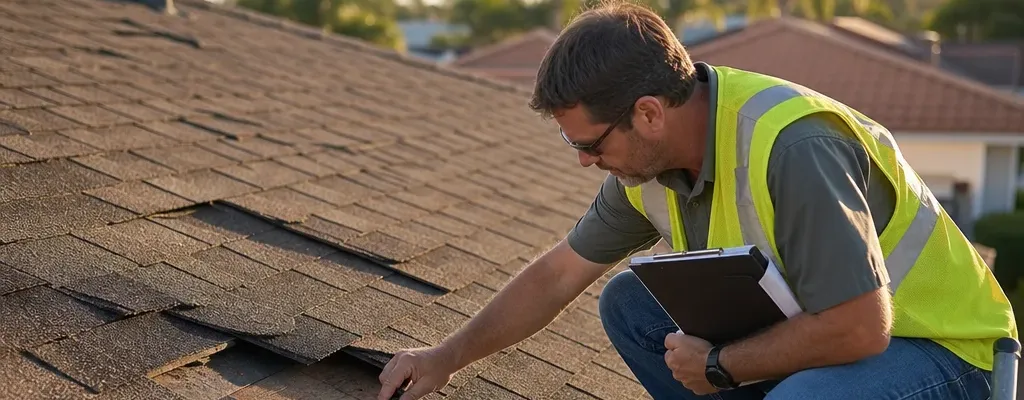
What a 4-Point Inspection Covers
A 4-Point Inspection checks four things in your home: the roof, the electrical system, the plumbing, and the heating and cooling. We look at the age, condition, and type of each one and document it with photos for your insurer, which uses the report to decide whether it will write or renew a policy on an older house. It isn't a full home inspection, and it isn't a pass-or-fail test of the whole house. It doesn't check the rest of the house, look behind walls, or evaluate sinkholes. Most insurance problems come from a short list of known red flags, so when you know what the insurer is looking for, you can often deal with small problems before they turn into a coverage problem.
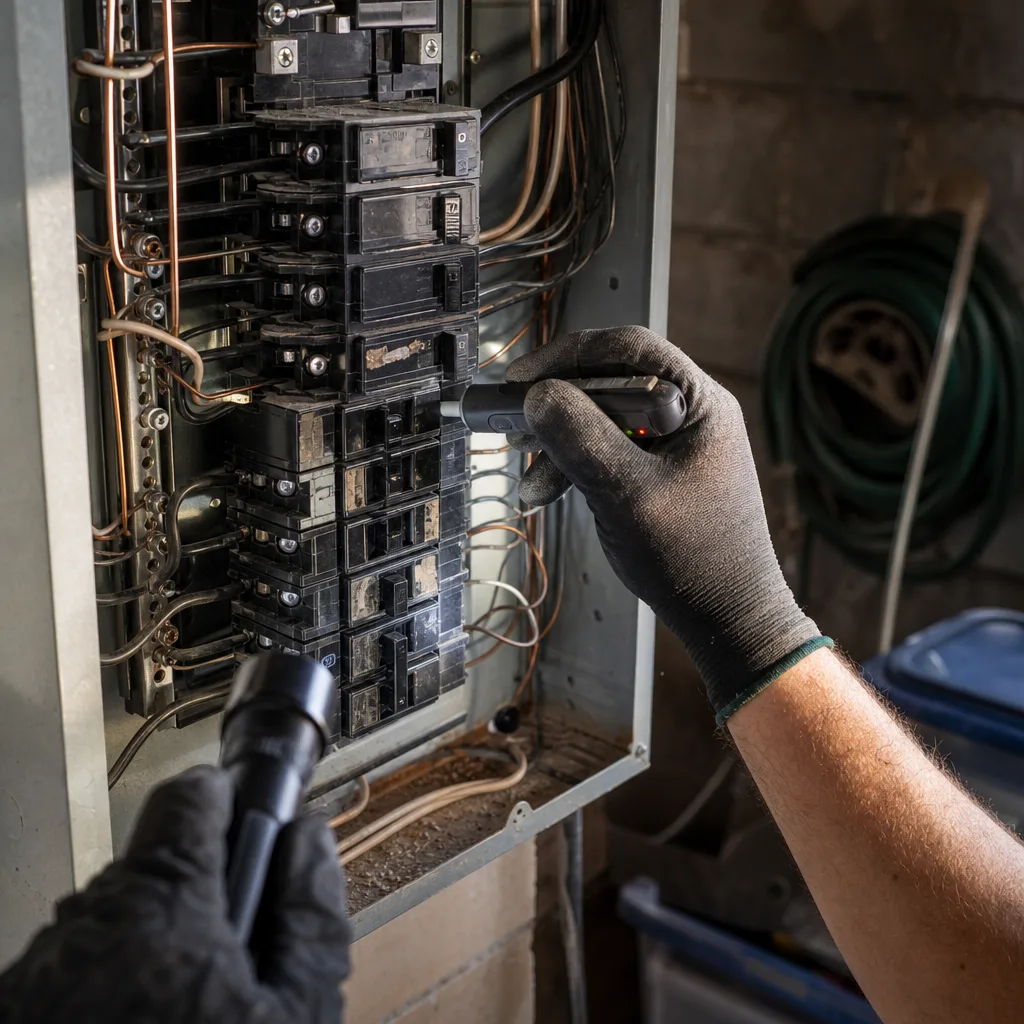
Here's what we look at in each area, and what tends to catch an underwriter's eye. An underwriter is the person at the insurance company who decides whether to cover the home.
- Roof: the type of covering, roughly how old it is, how much life it has left, and any signs of leaks, missing shingles, soft spots, or storm damage. We also check ceilings inside for water stains, because that's often the first place a roof leak shows up.
- Electrical: the main panel, the breakers, and the type of wiring. Insurers pay close attention to certain older panel brands, aluminum branch wiring, cloth-covered or knob-and-tube wiring, double-tapped breakers (two wires on a breaker built for one), scorch marks, and open spots in the panel cover.
- Plumbing: the type of supply pipes, the age of the water heater, and any active leaks under sinks or around toilets. Some older pipe materials are known for failing, and insurers often won't accept them.
- HVAC: whether the heating and cooling work, how old the equipment is, and whether it looks properly maintained. In Florida's heat and humidity, a dead or neglected AC is more than a comfort issue. It can lead to moisture and mold problems.
Each item gets photographed and written up on the form your insurer asks for. Age matters a lot here. A roof or water heater can look fine and still be flagged because it's past the age an insurer is comfortable with. If your roof is the main concern, a Roof Certification is a separate report focused on the roof alone.
We want to be straight with you about what this inspection doesn't do. It's a visual check of what we can see and safely reach. We don't open walls, move your furniture around, or check the foundation, the windows, or the appliances. It also doesn't evaluate sinkholes, which matters in Citrus County. That takes a different kind of professional. If you're buying a home, a 4-point inspection won't tell you everything about the house. That's what our full home inspection is for.
What we bring is a trained eye. Jamie spent many years in residential and commercial construction before he started inspecting homes, and he knows what age, water, and shortcuts do to a house. When we find something, we'll tell you plainly whether it's the kind of thing an insurer will flag or just normal wear for a house that age.
Why Insurance Companies Require This in Older Homes
Your insurance company never sets foot in your house. It writes the policy based on paperwork. With a newer home, that paperwork tells a pretty clear story. With an older home, the insurer doesn't know if the roof is original, if the wiring was updated, or if someone patched the plumbing on a Saturday afternoon. The 4-point inspection is how they find out without sending their own person.
They focus on these four systems for a simple reason. These systems cause the big, expensive claims. A roof that gives up in a storm, a slow leak that soaks a floor for months, or an electrical fire costs an insurer far more than almost anything else in a house. In Florida, storms, heat, and humidity wear these systems down faster, so insurers here watch them closely.
Age stands in for risk. Each insurance company sets its own rules for how old a home has to be before it asks for a 4-point, and those rules aren't the same from one company to the next. They can also change. The quickest way to know where you stand is to ask your agent two questions: does my home need one, and is there anything this company won't accept?
The request usually shows up at one of these moments:
- You're buying an older home and need a new policy before closing.
- You're switching to a different insurance company.
- Your current company sent a non-renewal notice and you're shopping for coverage.
- Your insurer asks for an updated report at renewal.
The buying scenario is where timing gets tight. Your lender won't close without proof of homeowners insurance, and the insurer may not bind a policy without the 4-point. Picture an out-of-state buyer under contract on an older block home in Inverness. Two weeks before closing, the agent says the insurer needs the report. If it turns up an electrical panel the company won't take, that buyer now has to find an electrician, get the work done, and get a new report, all before the closing date. Ordering the inspection early gives you room to fix things instead of scrambling.
Being asked for a 4-point isn't a sign something's wrong with your house. It's routine for older homes. And because insurers care about a short, known list of problems, you're not walking in blind. If you know a flagged item is there, you can often take care of it before the inspection rather than after a denial.
This works in your favor in another way, too. If you've put in a new roof, swapped the panel, or replaced old pipes, the 4-point is where that work gets on record with your insurer. Keep your receipts and permit records with dates handy. They help show when updates were done, which matters a lot to an underwriter looking at an older house.
While you're dealing with your insurer, ask about a Wind Mitigation Inspection as well. It's a separate report that may help lower your premium.
4-Point Inspection vs. Wind Mitigation and Full Home Inspections
People mix these three up all the time, and it's easy to see why. They all involve someone walking through your house with a camera and a clipboard. But each one answers a different question for a different person. If you order the wrong one, you can lose days you don't have before a closing or a renewal date.

The simplest way to keep them straight is to ask what each report is for.
- 4-point inspection: Will the insurance company cover this house at all? It looks at the age and condition of the roof, electrical, plumbing, and HVAC.
- Wind mitigation inspection: How much should this house cost to insure? It looks at how well the home is built to hold up in high wind.
- Full home inspection: What am I really buying? It's for the buyer, not the insurer, and it covers much more of the house.
A Wind Mitigation Inspection doesn't care how old your water heater is or what kind of pipes you have. It's about the features that help a house resist storms. That includes how the roof deck is fastened down, how the roof is tied to the walls, the shape of the roof, and whether your windows and doors have storm protection. Insurers in Florida can give discounts for those features. A 4-point can get you a policy. A wind mitigation report can lower what you pay for it. They don't replace each other, and on an older home your insurer may want both.
If the metal clips that tie your roof to your walls were installed with only two nails, they don't earn the clip credit on a wind mitigation form. A Third Nail Retrofit Inspection documents the added third nail once the work is done. It's a narrow report with one job.
A full home inspection is a different animal, and it's one we do too. It's what you get when you're buying and want the whole picture before you sign. It looks at the structure, the attic, the windows and doors, the outside drainage, the appliances, and much more. It's still a visual inspection, and it still won't evaluate sinkholes. But it goes well past the four systems an insurer cares about. Your insurance company usually won't accept a full home inspection report in place of a 4-point. Insurers want their own form, filled out their own way.
That last point trips up a lot of buyers. They pay for a full inspection, assume insurance is covered, and then get a call from their agent asking for the 4-point a week before closing. If you're buying an older home in Inverness, plan on needing the 4-point and the wind mitigation report for your insurer, separate from the full home inspection you get for yourself. We do all three, and we can line them up together.
Not sure which one you need? Ask your insurance agent which reports they need, by name. Ask your real estate agent when the insurer needs them. Those two answers tell you what to order and how soon.
If you need both insurance reports, mention it when you call. Both go to the same insurer, so it makes sense to get them lined up together instead of chasing them one at a time.
Who Should Perform Your 4-Point Inspection
Your insurer won't take a 4-point from just anyone. It has to be signed by a Florida-licensed professional the insurance company accepts. That's often a licensed home inspector, but some insurers also take reports from other licensed trades. Every company keeps its own list, so ask your agent who they'll accept before you book. A report your insurer turns down is just lost time.
A license gets you in the door. It doesn't tell you whether the report will help you. Here's what we'd look for if we were hiring someone for our own house:
- A license number printed right on the report. Underwriters check it, and you should be able to as well.
- Clear photos of every item the form asks for. Missing or blurry photos are a common reason a report gets kicked back.
- The insurer's form, filled out completely. Leaving a blank or writing "unknown" where an age belongs can stall your policy.
- Someone who will explain what they found. You should know which items an insurer will care about and which ones are normal wear.
- Honesty over a clean report. An inspector has to write down what's there. Be wary of anyone who promises your house will pass.
That last point matters more than people think. A 4-point that hides a problem doesn't make the problem go away. It can come back later as a denied claim, and that's a much worse time to find out. A good inspector tells you what's there and helps you figure out what to do next.
That's how we run JD Inspections. Jamie DiLeo is the owner and a Florida licensed home inspector, license HI9000. He grew up here and graduated from Citrus High School in Inverness. Before inspecting, he spent many years in residential and commercial construction, and he has torn into enough walls to know what a small stain or an old panel can turn into. When we write up your 4-point, we'll tell you plainly what an underwriter is likely to flag and what's not worth worrying about.
If you're buying from out of state, you probably can't be here for the inspection, and that's okay. Call us, and we'll walk you through the findings so you're not left trying to make sense of a form on your own.
To veterans and military families, thank you for your service. JD Inspections offers military and veteran discounts. Just mention it when you call.
When you reach out, have a few things ready. You'll want the property address, roughly when the house was built, your insurance or closing deadline, and any receipts for roof, electrical, plumbing, or AC work. If your insurer also wants a wind mitigation report, tell us then so both can be lined up together. Office hours are Monday through Friday, 8:30 to 5:00.
What Happens If the Inspection Finds a Problem
First, take a breath. A problem on a 4-point report isn't a denial. We don't approve or reject your policy. We write down what's there, with photos, and the underwriter makes the call. A flagged item means the insurer will look at it. It doesn't mean the door is shut.
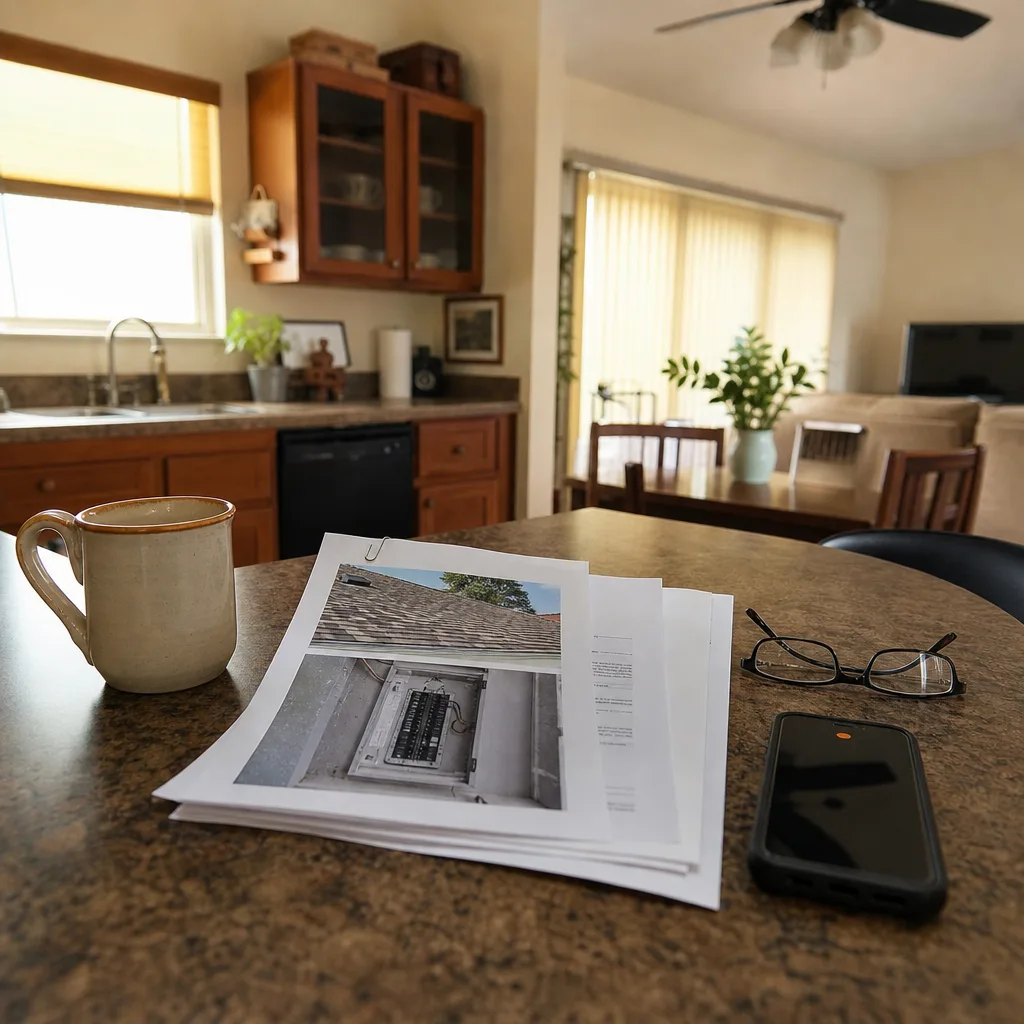
Not every finding carries the same weight. Most of them fall into one of three groups.
- Small fixes. A missing screw in the panel cover, a drip under the kitchen sink, or a loose toilet. These are often cheap and quick to fix, and fixing them before the report goes in can keep them from becoming a question at all.
- Age flags. The system works fine, but it's older than the insurer likes. A 20-year-old water heater with no leaks can still get flagged. Here the insurer's own rules decide the outcome more than the condition does.
- Real deficiencies. An active roof leak, a panel or wiring type the insurer won't accept, or AC equipment that doesn't run. These usually have to be repaired or replaced before the company will write the policy.
When we go over the report with you, we'll tell you which group each item falls into. That way you're not spending money on something that won't change the insurer's mind, and you're not ignoring something that will.
If something does need work, here's the usual path:
- Ask your insurance agent exactly what the company needs to see. Sometimes that's a full replacement. Sometimes a repair is enough.
- Hire a licensed contractor for the trade involved, like a roofer, an electrician, or a plumber. Ask whether the job needs a permit. Insurers put more trust in work that's documented.
- Get an updated 4-point that shows the fix, so the underwriter sees the current condition and not the old one.
You may have other choices too. Insurance companies don't all follow the same rules, so a roof one company won't take might be fine with another. A good independent agent can shop the same report around. Just make sure the report shows the house as it really is, because a report with a problem left off can turn into a denied claim later.
If you're buying, a flagged item can work in your favor. You found it before closing, not after. You can ask the seller to make the repair, lower the price, or give a credit so you can handle it yourself. Your real estate agent can tell you what makes sense under your contract. That's a much better spot to be in than finding an old panel after you own the house.
If you already own the home and your renewal is coming up, the same goes for you. A flagged item gives you a clear to-do list instead of a surprise. With water, age, and Florida weather, a small problem like a slow leak or a tired roof only gets bigger and more costly the longer it waits. Fixing it now protects your coverage and the house itself.
Frequently Asked Questions
How long is a 4-Point Inspection report good for?
Most insurers want a report that reflects your home's current condition, so an old report can lose its value fast. Insurance companies set their own rules on how recent a report needs to be, especially around renewal or a policy switch. Ask your agent how fresh the report must be before you schedule it, so you don't end up paying for one twice.
Can I be there while the inspection happens?
Yes, you're welcome to walk through with us if you're local to Inverness. If you're buying from out of state and can't make it, that's fine too. We'll call you afterward and go over every photo and finding so you understand exactly what the report says before it reaches your insurer.
Does a 4-Point Inspection check for mold or water damage?
A 4-point inspection isn't a mold test, but it often turns up early warning signs. While checking the roof, we look at ceilings for water stains, and while checking HVAC, we note if the system looks neglected, since a dead AC in Florida's humidity can lead to moisture problems. We'll tell you plainly if something looks like it's heading toward a bigger issue.
Do I need a 4-Point Inspection or a Wind Mitigation Inspection for my Inverness home?
It depends on why your insurer is asking. A 4-Point Inspection checks if your home is insurable by looking at the roof, electrical, plumbing, and HVAC. A Wind Mitigation Inspection looks for discounts on a policy you already have. Many Inverness homeowners need both, and you can book them in the same visit.
How do I know if I need a Roof Certification instead of a 4-Point Inspection?
You likely need a Roof Certification if your electrical, plumbing, and HVAC are newer but your roof is older. This inspection covers only the roof. A 4-Point Inspection bundles the roof with three other systems. Ask your agent or lender which one they requested in writing.